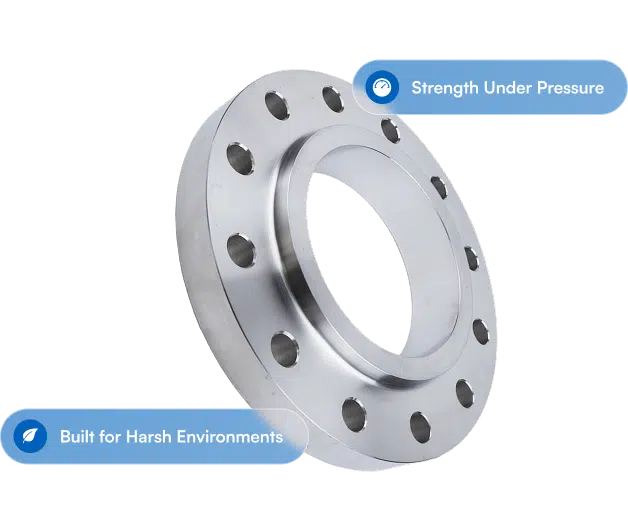
How Do I Identify an Unmarked Flange? A Field Guide to Decoding Mystery Flanges in Your Plant
Some systems hold up well with age, but we all know father time is undefeated…
A maintenance lead emailed us this week with a problem we hear about constantly, and if you’re reading this, there’s a good chance you’ve come across this same issue in the field once in your career as well. So his plant was working a turnaround on a 30 year old unit. They pulled a flanged connection apart, found a crack in the hub, and went to the warehouse to pull a spare from the rack. The spare bin held three flanges of roughly the right size, but none of them had markings. No heat number, no class stamp, no manufacturer ID… nothing on the OD. The original purchase records were nowhere to be found, and the original buyer long since retired.
His question was simple: How do I figure out what these are?
The honest answer is that some of it you can determine in the field with a tape measure and good eyes, and some of it you cannot determine at all without a lab and the proper purchase records or MTRs/documentation. Let’s discuss the practical workflow we walk customers through when this comes up.
First, Confirm It Is Actually Unmarked
ASME B16.5 Section 4 requires manufacturers to mark forged flanges with the size, pressure class, material grade, heat number, and the manufacturer's identification. The marking goes on the outer diameter, typically on the side of the flange opposite the raised face. Although rare, on some weld neck flanges it can also appear on the hub.
The markings are often there but obscured by paint, rust, mill scale, or wear. Before assuming a flange is unmarked, wire-brush the OD and hub clean down to bare metal if necessary. Wipe with a solvent. Examine in good lighting. Use a flashlight at a low angle to bring out shallow stamps. About a third of the "unmarked" flanges we get asked about turn out to have legible markings under twenty years of paint and anticorrosive coatings.
If after a thorough cleaning the flange is genuinely blank, you are working with the field measurements alone.
What You Can Determine with a Tape Measure
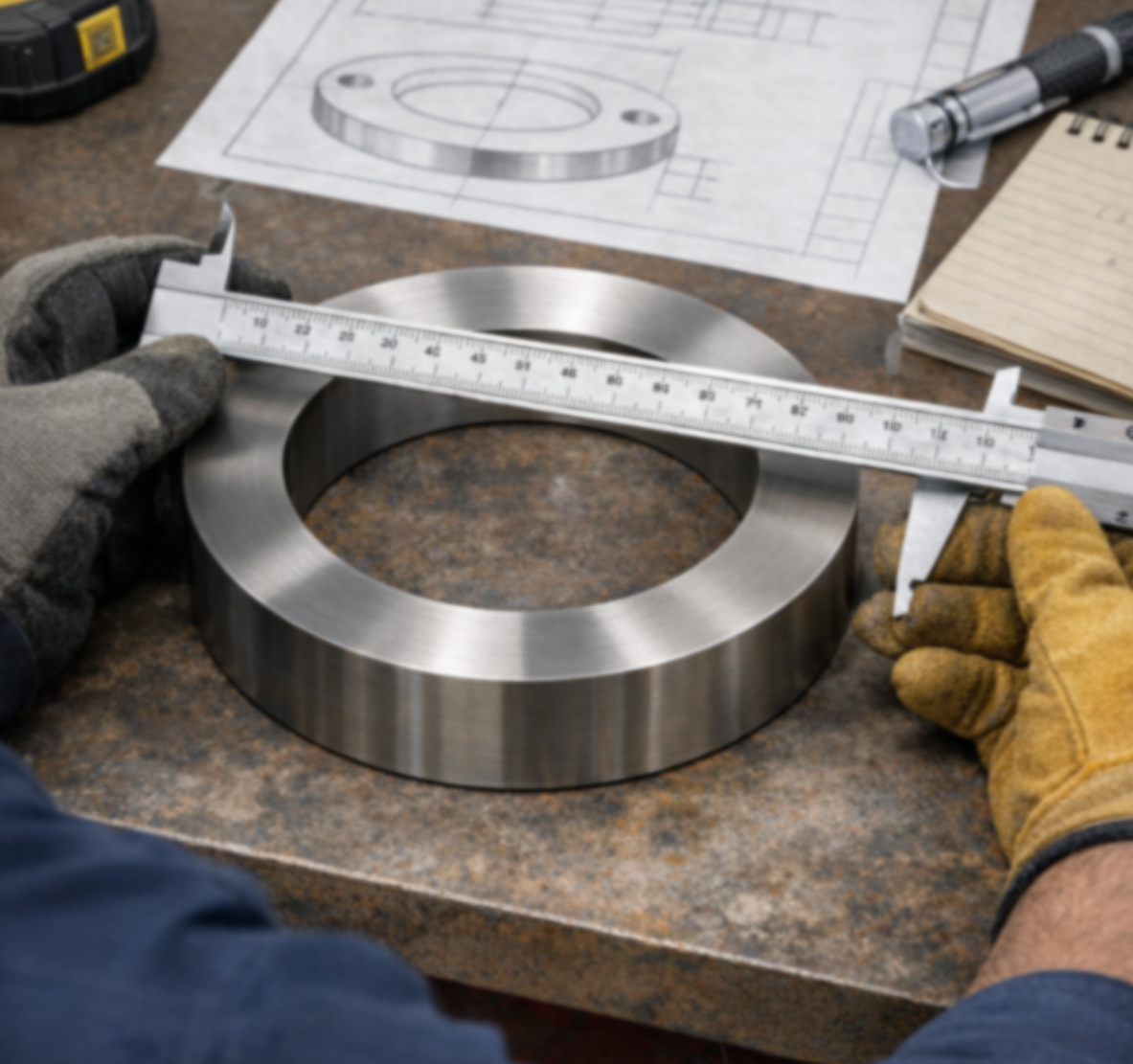
Five measurements will get you most of the way to identifying the flange standard, size, and pressure class. Take them carefully because flange dimensions cluster close together and a quarter-inch error sends you to the wrong row in the chart.
Outside diameter (OD). Measure across the full face of the flange, edge to edge. This is the most useful single dimension because it is unique within a given standard and class for each nominal size.
Bolt circle diameter (BCD). Measure from the center of one bolt hole to the center of the bolt hole directly across. If the flange has an even number of bolts (almost all do), this works. Tolerances on here are tricky, so you have to measure evenly. For an odd-bolt pattern, measure from a bolt hole center to the midpoint of the opposite arc and double it.
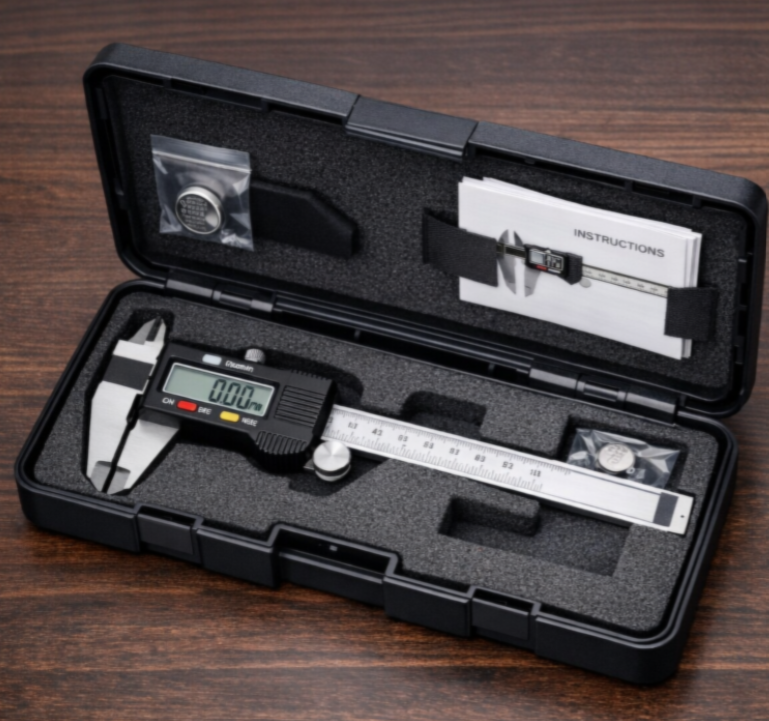
Bolt hole count and diameter. Count the holes and measure the diameter of one of them with a caliper for accuracy.
Flange thickness. Measure the thickness of the flange itself, not including the hub or raised face. On a weld neck, this measurement is the disk portion with the bolt pattern only. On a flat ring flange, it’s the whole thing.
Bore diameter. Inside diameter of the flange at the pipe-side opening. For a weld neck, this is the bore of the neck. For a slip-on or socket weld, it is the bore the pipe slides into.
Write all five down. With those numbers in hand, cross-reference against the standard flange dimensional tables. Take pictures when you can, to help identify the flange style.
Cross-Reference Against the Standards
Most industrial flanges in North American plants conform to one of four standards. Compare your measurements against the dimensional tables for each until you find a match, or something close to it. All of these dimensions are in the Texas Flange catalog.
ASME B16.5 covers ½" through 24" nominal pipe size in pressure classes 150, 300, 400, 600, 900, 1500, and 2500. This is the most common standard for process piping in petrochemical, refining, and general industrial service. Our B16.5 forged flange dimension pages list OD, bolt circle, bolt count, bolt hole size, and thickness for every size and class combination. These modern dimensions were derived from the outdated B16.1 spec.
ASME B16.47 Series A and Series B cover 26" through 60" nominal in classes 75 through 900. If your flange is larger than 24", you are generally in B16.47 territory. Series A and Series B have the same OD and pressure rating for a given size and class but different bolt counts and bolt circles, so once you have it narrowed to B16.47 by OD, the bolt count tells you which series. Again, these specs are influenced by the outdated B16.1 large diameter.
ASME B16.1 is the cast iron flange standard, Classes 125 and 250, which formed the basis of the modern day Class 150 and Class 300. These are generally older waterworks and low-pressure utility service. If the flange has the rough exterior texture of cast iron rather than the smoother finish of a forging, suspect B16.1 and look to replace with B16.5 or similar.
AWWA C207 covers waterworks steel flanges in Classes B, D, E, and F. The bolt patterns match B16.1 Class 125 (for Classes B, D, E) or B16.1 Class 250 (for Class F), which means they also match B16.5 Class 150 and Class 300 drilling. The difference between C207 classes is flange thickness, not bolt pattern.
A B16.5 Class 150 and a C207 Class D flange of the same nominal size will have identical bolt patterns. The thickness measurement, facing, and hub is what separates them.
What the Field Measurements Will Not Tell You
The biggest limitation of measurement-based identification is that it cannot tell you the material grade. A 6" Class 300 weld neck flange in A105 carbon steel has the same dimensions as a 6" Class 300 weld neck flange in A182 F316L stainless. The dimensions tell you it is a Class 300 flange. They do not tell you what it is made of.
You can narrow the material category by observation:
Visual color and surface. Carbon steel is a duller gray and rusts in humid storage. Stainless is brighter, holds a polish, and resists rust. Chrome-moly looks similar to carbon steel but sometimes shows a slightly different oxidation pattern. These are clues, not confirmation.
Magnetic response. A magnet usually sticks firmly to carbon steel, chrome-moly (F11, F22, F91), and most ferritic stainless. It sticks weakly or not at all to austenitic stainless (304, 304L, 316, 316L). It does not stick to nickel alloys like Inconel or Hastelloy. This is the cheapest field test you can run, and it cleanly separates the austenitic stainless and nickel-alloy families from everything else. Paint and coating might interfere with magnetism.
Spark test. A grinding wheel touched to the flange edge produces a characteristic spark pattern that varies by alloy content. This is an old shop test, useful in experienced hands, and unreliable in inexperienced ones. We do not recommend relying on it for critical service.
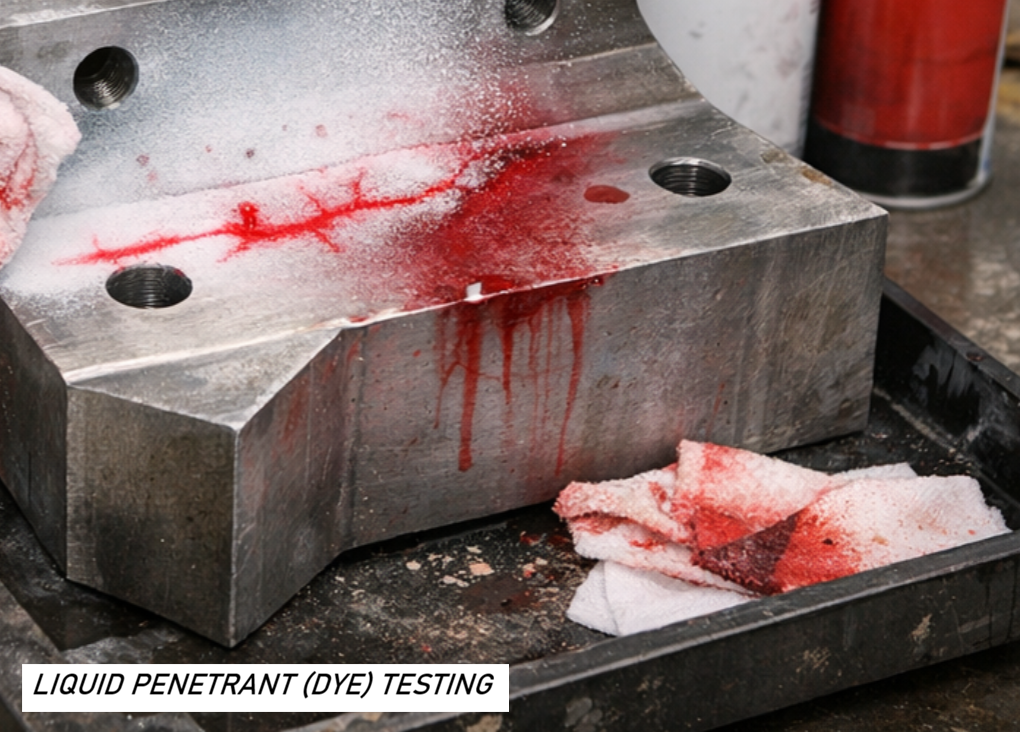
For anything beyond a rough material category, you need to employ a destructive (or preferably non-destructive) test method.
When to Send It to a Lab
If the flange will go into critical service, the material category alone is not enough. You need to know the actual grade and the certifications involved.
The two practical options are Positive Material Identification (PMI) using a handheld XRF analyzer, and laboratory chemical analysis on a coupon cut from the flange.
PMI with an XRF gun costs roughly $100 to $500 per sample lot if a third-party inspection company comes to your site, and it gives you the alloying element percentages in five minutes. XRF cannot detect carbon directly, which means it cannot distinguish 316 from 316L on its own, but it will identify the alloy family and pin down chromium, nickel, molybdenum, and other key elements. For most flange identification questions, that is generally considered enough, in combination with the material grade from the rest of the assembly you are working with.
Lab chemical analysis on a coupon cut from the flange runs $300 to $1000 per sample and gives you a full chemistry including carbon. This is the gold standard for identifying material grade. The downside is you have to cut a coupon, which means scrapping the flange or accepting that you have weakened it if a portion is removed from a non-critical section.
The American Society for Nondestructive Testing maintains certification programs for PMI technicians and is a useful resource if you are setting up an internal inspection program or vetting an outside provider.
If your plant has a budget constraint and a large pile of unmarked flanges, a tiered approach works well. Visual-and-magnet sort to separate likely austenitic stainless and nickel alloys from likely carbon and chrome-moly. PMI on a sample from each visual group to confirm the family. Reserve lab analysis for the handful of flanges going into critical service.
What to Check Before Putting an Unmarked Flange Into Service
Even after you have identified the size, class, and material, an unmarked flange should not go into critical service without further verification.
Pressure test. Hydrostatic testing per ASME B16.5 Section 8 verifies the flange can hold rated pressure. This is the same test the manufacturer runs before shipment.
Visual inspection of sealing surface. Scratches, pitting, or corrosion on the raised face will leak no matter what the material is. Inspect with a straightedge.
Dimensional verification. Confirm the bore concentricity, flatness of the sealing surface, and bolt hole alignment are within ASME B16.5 tolerances.
Hardness test. For sour service per NACE MR0175, hardness on the flange body must be at or below 22 HRC. Without an MTR, hardness testing is the only way to verify this.
For non-critical service such as low-pressure utility water or air, the field-identification workflow above is usually adequate. For critical service in hydrocarbon, sour, or high-temperature applications, our recommendation is to not use unmarked flanges at all. The cost of a new flange with full documentation is small compared to the cost of a failure traced back to a mystery flange someone pulled out of the warehouse.
What to Do When You Are Building the Warehouse the Right Way
The reason this comes up so often is that warehouses accumulate flanges over decades, paperwork gets lost, and stamps wear off. The fix is procedural, not technical.
Mark every flange with a permanent stamp or engraving when it enters inventory. Tag it with a printed label keyed to a spreadsheet. Photograph the original markings before they fade. Keep MTRs in a digital archive indexed to heat number. Twenty years from now, the maintenance team that inherits the warehouse will be able to identify what they have without calling a metallurgist.
If you have a pile of unmarked flanges and need help working through the identification process, send us measurements and photos and we will help you narrow it down. For background on what flange markings should include in the first place, our guide on verifying flange material grades walks through what you get on a properly documented flange and why it matters.
Texas Flange & Fitting Supply | 281-484-8325 | texasflange.com