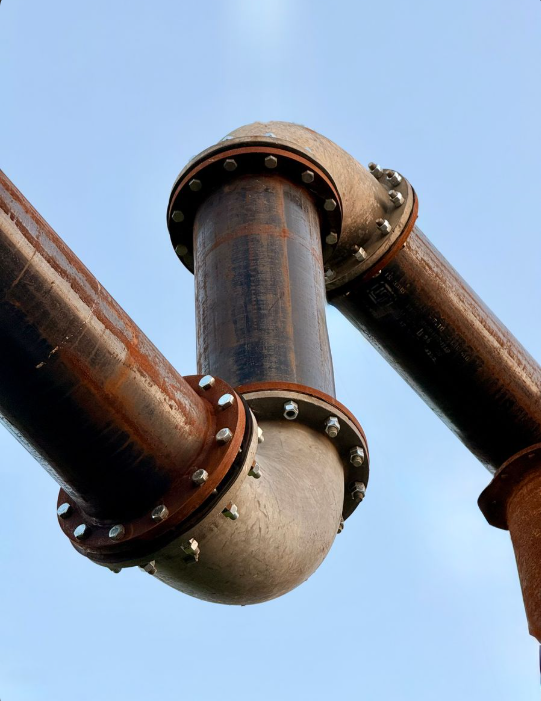
Hydrogen is not new to industry. Refineries have run on it for decades for hydrocracking and desulfurization, and ammonia plants have handled it at scale since long before anyone said "energy transition." What is new is where it is headed: pipeline blending, fueling infrastructure, and dedicated hydrogen production. That means "hydrogen service" is showing up on specs in front of buyers who never had to think about it before, and hydrogen does not behave like the natural gas or process fluids they are used to.
Two things make hydrogen a problem for a flanged joint. It attacks the steel, and it leaks. A flange that is perfectly sound on a crude line can be the weak point on a hydrogen line. Here is what "hydrogen-ready" actually means once you get past the marketing.
The Two Problems Hydrogen Creates
The first problem is hydrogen embrittlement. Hydrogen is the smallest atom there is, small enough to diffuse into the crystal structure of steel. Once it is in there, it reduces the steel's ductility and toughness, and under sustained stress that can lead to cracking the material would never have seen otherwise. The risk is not uniform across all steels. It gets worse as strength and hardness go up, which is exactly backwards from how engineers usually think about picking a "stronger" material. In hydrogen, harder and stronger can mean more brittle.
The second problem is leakage. That same tiny molecule that slips into the steel also slips through any path a seal leaves open. A gasket and surface finish that hold a 600# steam joint without a weep can still pass hydrogen. Sealing hydrogen is a tighter game than sealing almost anything else, and it has to stay tight through thermal and pressure cycling, not just on the day of the hydro test.
What ASME B31.12 Wants From the Material
Hydrogen piping in the U.S. is governed by ASME B31.12, the Hydrogen Piping and Pipelines code. It exists precisely because the general piping codes do not fully address embrittlement. For flanges, two themes drive the material selection.
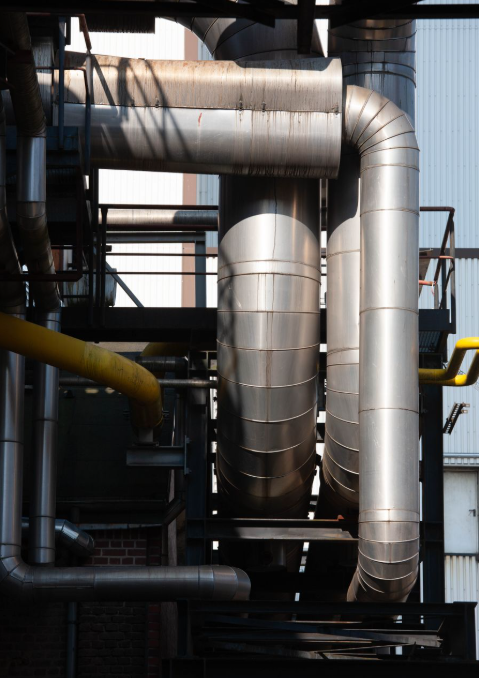
First, austenitic stainless steel is the baseline. Type 316 and especially 316L are the most stable austenitic grades and are relatively resistant to hydrogen embrittlement even in high-pressure gaseous hydrogen, because the austenitic structure does not embrittle the way higher-strength ferritic and martensitic steels do. For many hydrogen flange applications, solution-annealed 316L forgings are the safe default, and the solution anneal also relieves residual stress.
Second, B31.12 puts hard limits on the things that drive embrittlement: carbon equivalent and hardness. The code generally caps hardness around 22 HRC for the materials it allows in hydrogen service. Carbon steel such as A105 can be used in some gaseous hydrogen applications within the code's pressure, strength, and hardness limits, but the hardness ceiling is doing real work, and it is not optional.
If that 22 HRC number sounds familiar, it should. The same ceiling shows up in NACE MR0175 for sour service. But do not assume the two are interchangeable. Sour service guards against sulfide stress cracking caused by H2S; hydrogen service guards against embrittlement from hydrogen itself. They land on similar hardness limits by different roads, and a flange qualified for one is not automatically qualified for the other. If your service has both, it has to satisfy both. Our guide to NACE MR0175 sour-service flanges covers that side in detail.
Sealing It So It Stays In
Material gets you a flange that will not crack. Sealing gets you one that will not leak, and with hydrogen that is its own discipline.
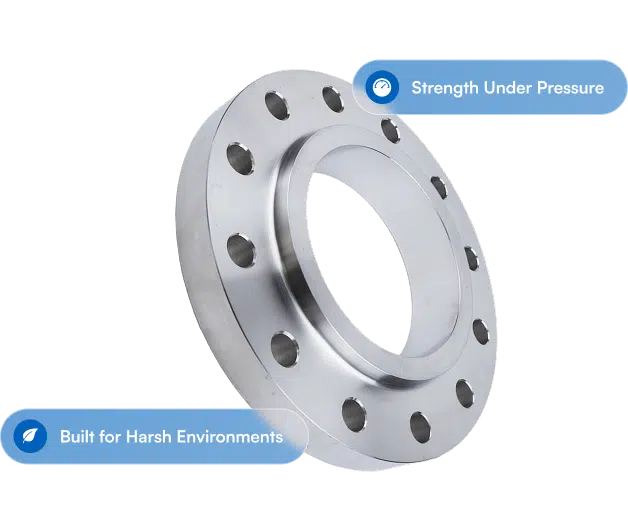
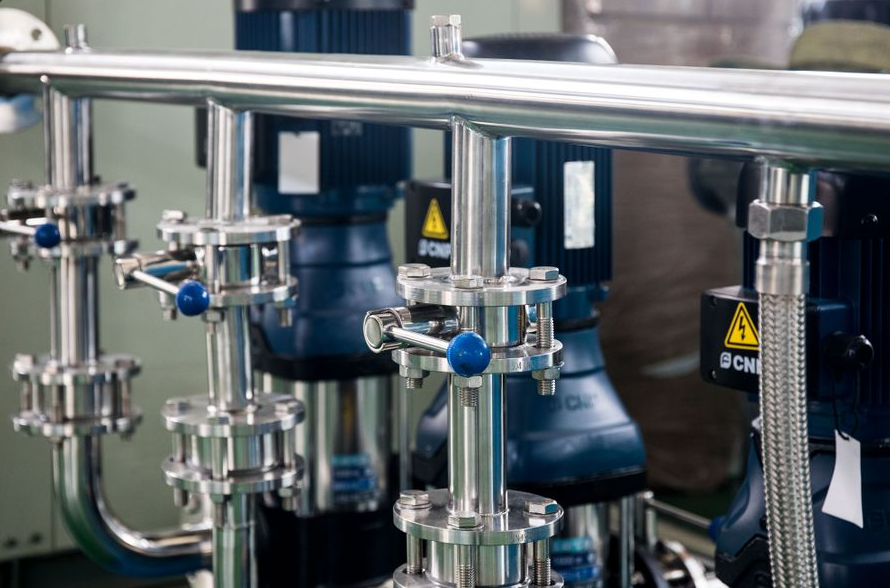
Weld neck flanges are preferred for the integrity of the joint and the smooth bore. Threaded connections are generally avoided in hydrogen service because every thread is a potential leak path. As pressure climbs, the ring type joint (RTJ) becomes the connection of choice, because a metal-to-metal seal seated in a machined groove holds hydrogen far better than a flat gasket compressed between raised faces. For lower-pressure service, gasket selection still matters more than usual: the seal has to maintain stress through cycling and ideally come with real leakage qualification data behind it, not just a generic rating. Our RTJ flange guide walks through where the metal seal earns its keep.
One detail that gets overlooked: the bolting. Hydrogen embrittles high-strength fasteners too, and bolting is often the highest-hardness steel in the whole joint. The bolt spec has to respect the same embrittlement limits as the flange, or the joint's weakest link becomes the studs holding it together.
A Hydrogen-Service Flange Checklist
Concern | What It Means | Spec Response |
Embrittlement | Hydrogen reduces steel ductility, worse at high hardness | 316/316L baseline; hardness capped ~22 HRC per B31.12 |
Governing code | General piping codes do not fully cover hydrogen | Specify to ASME B31.12 |
Residual stress | Raises cracking susceptibility | Solution-annealed 316L forgings |
Leakage | Smallest molecule finds any path | Weld neck, RTJ at higher pressure, qualified gaskets |
Bolting | Fasteners are often the hardest steel present | Bolt material held to the same hardness limits |
Sour + hydrogen | Different cracking mechanisms, similar limits | Must satisfy both NACE MR0175 and B31.12 |
The Bottom Line
"Hydrogen-ready" is not a sticker, it is a set of decisions: a material that resists embrittlement, a hardness held under the code limit, a seal built to keep the smallest molecule there is from finding daylight, and bolting that respects the same rules as the flange. Get those right and the joint is as reliable as any in the plant. Treat a hydrogen line like a natural gas line and you are designing in the failure.
If you have a hydrogen project, whether it is a blending pilot, a production unit, or a fueling skid, and you want the flanges specified to ASME B31.12 with the right material and documentation, send us the line conditions. We will get you hydrogen-compatible flanges, in 316L or code-compliant carbon steel, with the certs to prove it.
Texas Flange & Fitting Supply | 281-484-8325 | texasflange.com